Most Mysterious Islands in the World: History, Secrets and Mystery
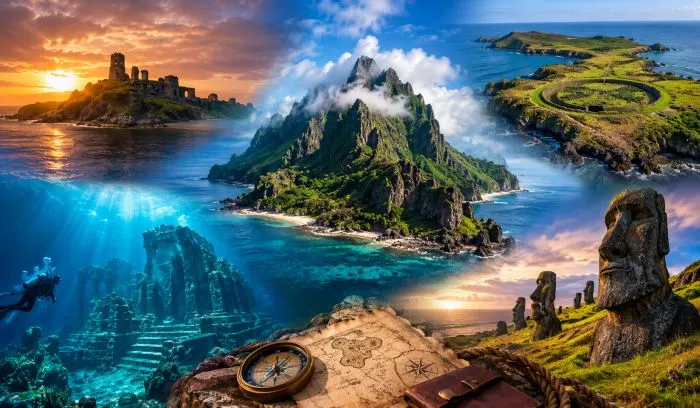



The most mysterious islands in the world are not always known for beautiful beaches or peaceful landscapes. There are stories of lost treasure, missing people, secret military experiments, nuclear testing and ancient monuments that remain mysteries to this day.
Oak Island in Canada has been a treasure trove for treasure hunters for over 200 years, and Roanoke Island is the site of one of the most famous unsolved colonial mysteries in the United States.
Enewetak Atoll has the history of nuclear weapons testing and Gruinard Island was the site of hazardous biological experiments. Easter Island is still a place of intrigue and wonder, with its massive statues known as moai and its many mysteries surrounding their creation and significance.
Islands Where History, Secrets and Unsolved Mysteries Meet
Some islands are famous not just for their beauty but for the strange stories hidden in their past. From lost treasure to vanished settlers and secret experiments, these places continue to raise questions.
Oak Island, Nova Scotia, Canada
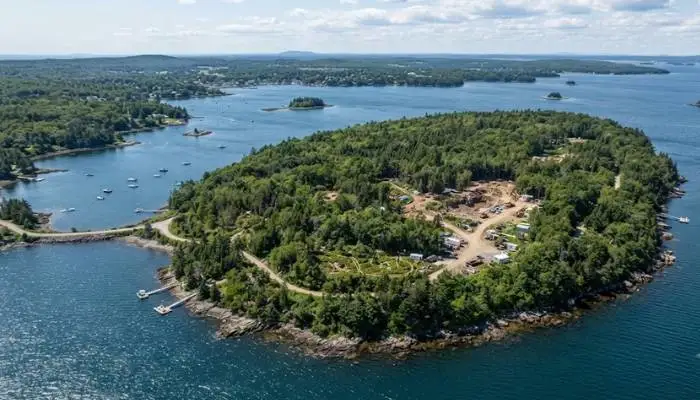
Lies just south of the coast of the Canadian province of Nova Scotia. For more than 200 years, explorers have hunted for treasure at this site.
The roots of the mythology behind this 140-acre island trace back to 1795, when treasure hunter Daniel McInnis allegedly found a circular depression in the ground. After he and his friends dug up the site, he claimed that they found a deep shaft filled with oak beams.
Read More: The UKs Most Amazing Natural Wonders
In 1804, someone allegedly found a stone slab bearing an inscription 90 feet (27m) below the bottom of the shaft. The whereabouts of the slab is uncertain (in fact, it's unknown if such an object ever existed), although in 1949, someone may have read a possible translation of its inscription: "Forty feet down two million of pounds are interred."
Old searches also apparently uncovered a drain/tunnel system to the sea which would flood the pit as operations proceeded below specific depths. Hazardous efforts to locate the treasure have caused at least six men to lose their lives throughout the years. The island shore now remembers these men with this memorial.
Enewetak Atoll, Marshall Islands
The Marshall Islands appear to be a picture-postcard paradise in the Pacific, but the isolated nation has a secretive past. When the U.S. captured the collection of islands from Japan in 1944, they didn't realize they would be taking the first steps toward establishing a nightmarish new era that the isolated atolls would instead become a testing range for nuclear weapons.
- In the above picture, the Enewetak Atoll (a chain of 40 coral islands) shows most of a string of cold-war tests. The blast over the landmass (the fireball rising) is the seminal nuclear blast, a series of experiments in 1956 for which they set off a sequence of three nuclear bomb test explosions called operation redwing. This only came into recent knowledge and recently declassified.
- In all, 67 nuclear explosions occurred in the Marshall Islands between 1946 and 1958, and researchers conducted 44 of these tests near the Enewetak Atoll. To worsen it all, workers deposited the dumped soil that had radioactive contents on an island in the Enewetak Atoll Runit Island in the 1970s to dispose of toxic waste materials produced after the tests.
The picture below shows a team of military men in overalls watching a load of nuclear waste products, concretes, and polluted soil dumped in an abandoned bomb crater on top of Runit Island, which is at the tip of the Enewetak chain. Afterward, workers sealed the waste-disposal site with a concrete dome that measures 115m (377 ft) across and 45 feet thick.
Roanoke Island, North Carolina, USA
Colonists faced difficulties on Roanoke Island and strained relations with local Algonquian, Secotan, and Croatoan Native Americans. After only a month, John White completed the long journey back to England for much-needed supplies and to gather new colonists. When White met the settlers, they intended to move inland to find a more habitable location to set up in.
White's plan for a quick return to the island faced obstacles when King Philip II of Spain prepared for an invasion of Britain via the Spanish Armada; the authorities confiscated all vessels for defense. When White eventually returned to Roanoke in 1590, he found the island abandoned and the only clue to the colonists' fate was the word 'CROATOAN,' carved on a post.
Gruinard Island, Wester Ross, Scotland, UK
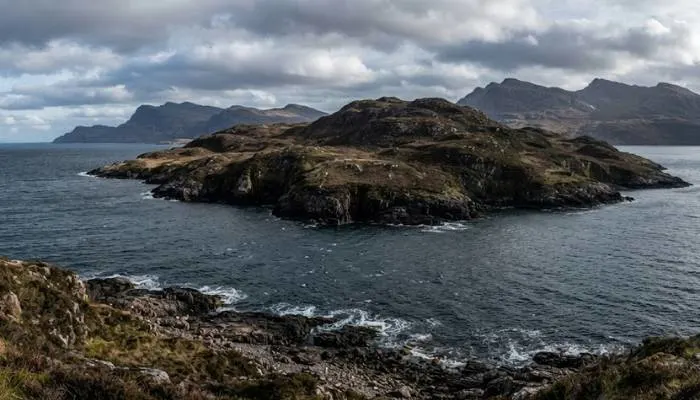
Gruinard Island off the west coast of Scotland is a desolate outpost that has always provoked fascination. Despite an appearance of unremarkable and rugged wilderness it has a deadly secret that led to the quarantine of the entire island for nearly 50 years.
In World War Two, Britain's Ministry of Defense discovered the isolated island and considered this location the ideal place to conduct experiments. This was where they hoped to find extremely deadly biological weapons and then deploy them against Germany. Having purchased the 522-acre island in 1942, The War Office commenced a series of secret experiments.
You May Also Read: 10 Best Budget Mountain Destinations to Visit in 2026
Easter Island, Chile
The Rapa Nui people carved more than 900 moai statues on Easter Island between 1250 and 1500. These huge stone statues of human faces are unbelievably heavy, and some of them weigh about 86 tonnes! It is not confirmed how they transported all the way across the island to where they are situated after workers carved them in the quarry; however, based on the shapes of the bases, researchers think they rocked forward from side to side, almost walking. Guides may then have used ropes.
The reasons why the gigantic statues were built are unknown, but researchers have suggested that the moai honored their ancestors and guarded the Rapa Nui's settlements. They have also been said to have been erected on spots where freshwater exists on the island.
FAQs
1. What is the most mysterious island in the world?
Oak Island is often considered one of the world's most mysterious islands because of its long-running treasure-hunting mystery and underground structures.
2. Why is Oak Island famous?
Oak Island is famous for the centuries-old mystery surrounding a suspected treasure shaft, underground tunnels and reports of a mysterious stone slab.
3. What happened on Roanoke Island?
The Roanoke colony disappeared, and when John White returned in 1590, the settlement had been abandoned. The word “CROATOAN” was found carved on a post.
4. Why is Enewetak Atoll mysterious?
Enewetak Atoll has a secretive Cold War history. It was the site of numerous U.S. nuclear weapons tests between 1946 and 1958.
5. Why is Easter Island famous?
Easter Island, also known as Rapa Nui, is famous for its more than 900 massive moai statues. Researchers still study how these huge statues were moved and why they were built.